The symptom usually arrives as a choice. You are in Norwood with two tires worn down and two with life left, the budget covers a pair, and the question sounds simple: do the new tires go on the front, where the steering and most of the braking happen, or on the back? Nearly everyone answers front. Nearly everyone is wrong, and the reason is a wet-road behavior most drivers have felt once and never forgotten.
Work through it like a troubleshooting problem: start with what the car does when grip runs out, identify which end losing grip is recoverable, and the placement answers itself. The rule holds for front-wheel drive, rear-wheel drive, and all-wheel drive alike.
The symptom: two kinds of slide
When the front tires lose grip first, the car understeers: it plows straight ahead while the driver turns the wheel. It is unnerving, but the instinctive response, lift off the throttle and unwind the steering a little, is also the correct one, and the tires often regain grip on their own. Most drivers recover from understeer without ever learning the word for it.
When the rear tires lose grip first, the car oversteers: the back end steps out and the car rotates. Correcting it requires steering into the slide with timing and restraint, a skill that has to be already learned, because panic inputs make it worse. On a wet Piedmont highway at speed, a rear slide is the one that ends in a spin. The entire placement rule exists to make the recoverable slide the one you get.
- Name the symptom: decide which slide you would rather meet, the front plowing wide or the rear stepping out.
- Check tread on all four tires with a gauge or the quarter test, and note which axle is shallowest.
- Put the new pair on the rear axle, regardless of which wheels drive the car.
- Move the best remaining pair to the front, and set all four pressures to the door placard figures.
- Ask for the wear diagnosis: rotation history, alignment, and pressure habits that wore one pair out early.
- Set the next rotation date before you leave, so the set wears evenly from here on.
The cause: tread depth is wet grip
Tread does its most important work in water, channeling it out from under the tire so rubber stays in contact with pavement. A worn tire on a wet road starts to ride up on the water film at speeds a deeper-treaded tire handles easily. Whichever axle wears the shallower tread reaches that point first, and on a rainy night that axle is the one that lets go.
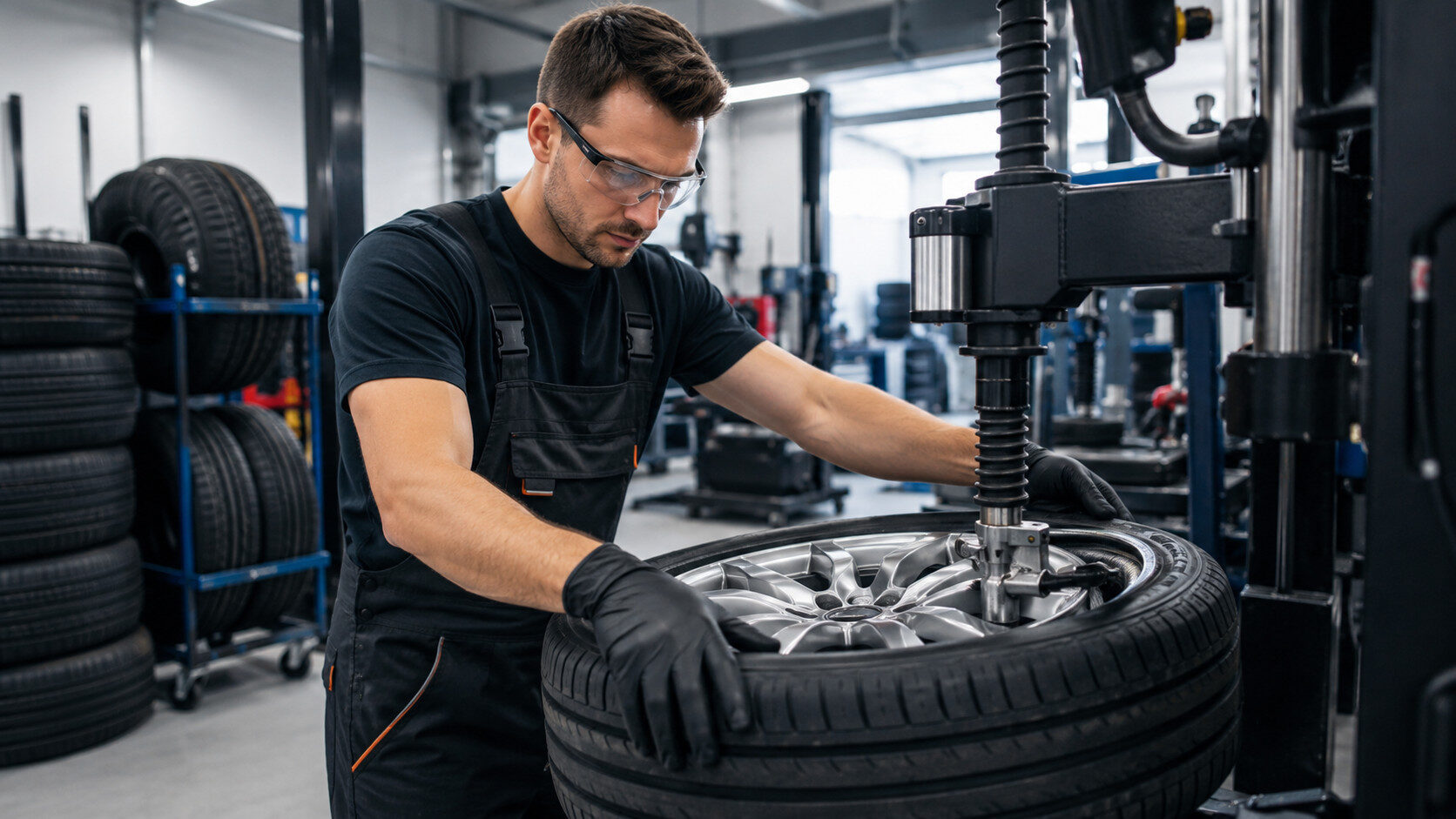
This is why the new pair, with full tread depth, belongs on the rear even on a front-wheel-drive car whose front tires do the driving, steering, and most braking. It feels backwards in the shop and obvious in the rain: the front tires can be managed by the driver; the rear tires, once sliding, mostly cannot. Shops like M & R Retreading & Oil Co install pairs this way as standard practice, and the occasional argument at the counter ends when the physics gets explained.
The fix, and how to avoid the choice
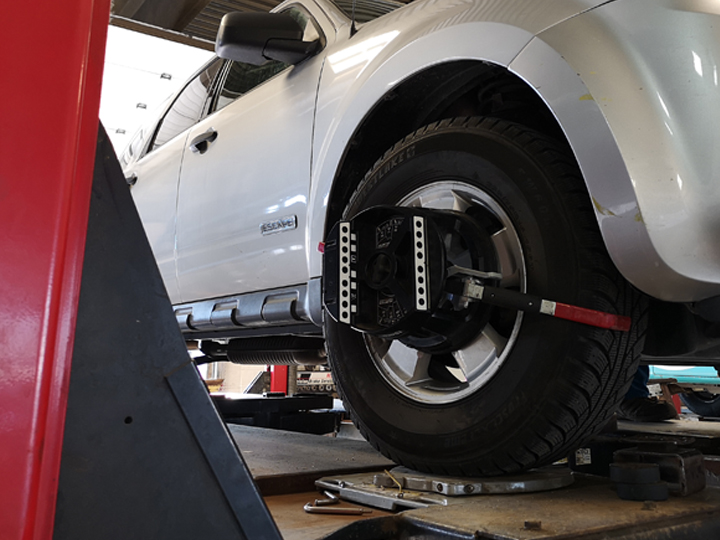
If you are replacing a pair today, the steps are plain: new tires on the rear axle, the better of the old pair moved to the front, all four pressures set correctly, and a balance and alignment check if wear was uneven. Then ask why the front pair wore out first, because the usual answers, skipped rotations, alignment drift, or chronic underinflation, will do the same to the next set.
The way to never face the choice is rotation discipline. Rotating on a regular interval, commonly every 5,000 to 8,000 miles, evens wear across all four so the whole set reaches replacement together. Four matched tires at even depth is the best wet-weather setup there is, better than any clever pair placement. The front-or-back rule is the right answer to a situation that rotations exist to prevent.
Common questions
My car is front-wheel drive. Surely the new tires go up front?
It is the most natural guess and still backwards. Front grip loss is recoverable by lifting off and unwinding the wheel; rear grip loss is the spin. The new pair protects the rear.
Can I put one new tire on?
One new tire beside a worn partner on the same axle creates a grip mismatch. Pairs are the minimum sensible unit, and all-wheel-drive vehicles often need all four matched closely.
Does this rule apply in dry weather too?
The dramatic difference shows in the wet, but rear stability matters in emergency maneuvers on dry pavement as well. The placement rule is year-round practice.
Photos in this guide are representative stock images.
← All guides from M & R Retreading & Oil Co← Back to M & R Retreading & Oil Co