A flat in Norwood usually announces itself politely: a tire pressure light on a cold morning, or one corner of the car sitting a little low in the driveway. The hopeful question is always the same: can that be fixed, or am I buying a tire? Industry repair guidelines answer most cases before the tire even comes off the car.
This is a how-to in two parts. There are things you can sensibly do yourself, from finding the leak to getting the car to the shop without ruining the tire. And there is a clear professional line, because a proper repair requires taking the tire off the wheel and inspecting it from the inside, which no roadside kit can do.
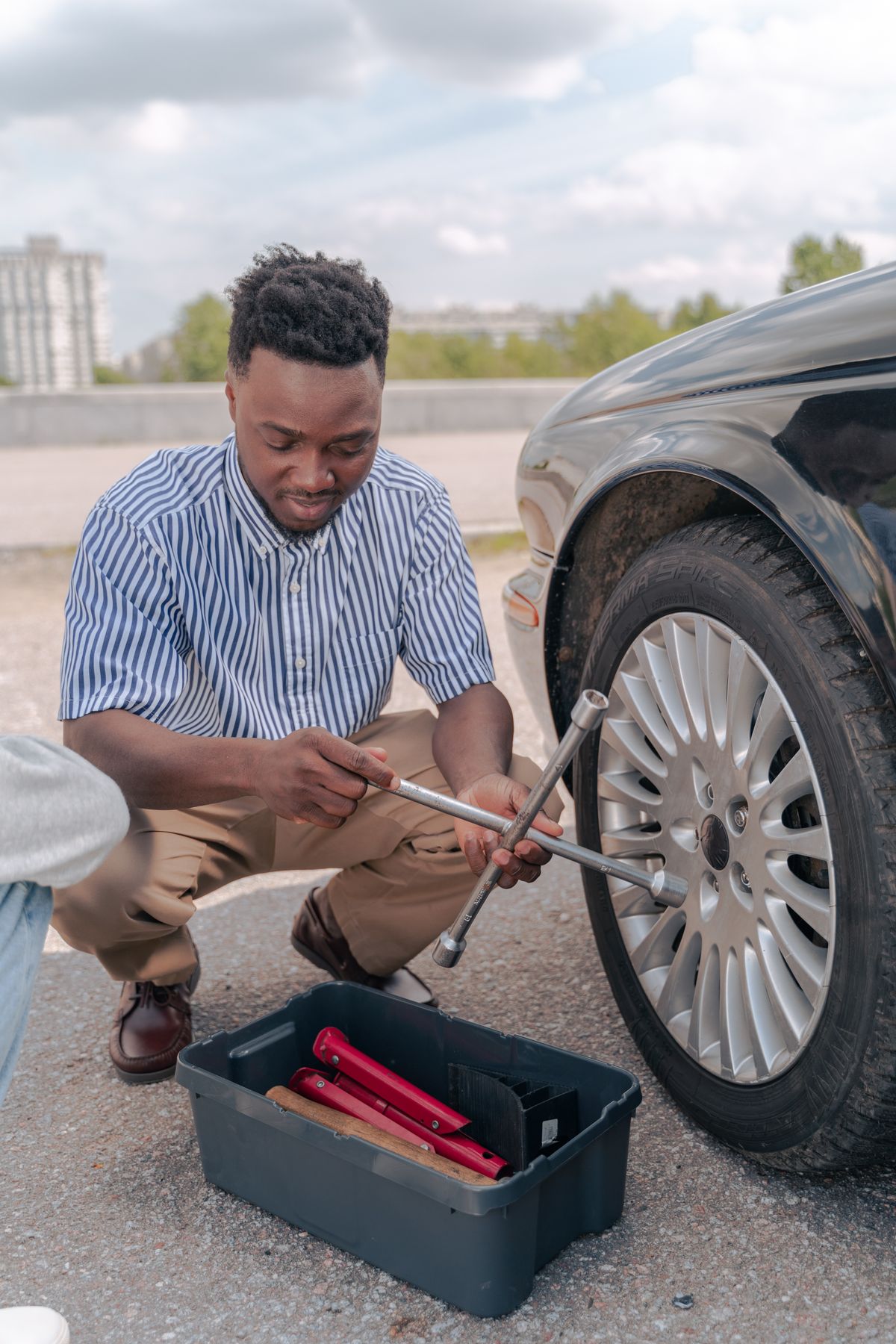
What you can do yourself
Start by finding the cause if you can do it safely. Look over the tread for a nail, screw, or cut, and check the valve stem for cracks or a loose core. A spray of soapy water over the tread and stem bubbles at a leak and settles arguments. Check the pressure with a gauge if you have one; a tire that loses a few pounds a week has a slow leak worth scheduling, while one that drops overnight needs attention today.
If the tire is flat or nearly flat, do not drive on it beyond a very short, slow move to safety. Driving on a flat crushes the sidewall between the rim and the road and ruins a tire that was repairable an hour earlier. Fit the spare if you have one and know how, or call for help. Either choice protects the tire you are hoping to save.
- Find the leak safely: inspect the tread and valve stem, and use soapy water to confirm where air is escaping.
- Decide on driving: a slow leak with pressure still in the tire can make a short, gentle trip; a flat tire cannot.
- Protect the tire: fit the spare or call for help rather than driving on the rim and sidewall.
- At the shop, expect the tire to come off the wheel for an inside inspection before anyone promises a repair.
- Apply the rules: tread area only, about a quarter inch or smaller, no sidewall, shoulder, or run-flat damage.
- Repair with a combination plug-patch that fills the injury and seals the liner, then remount and balance.
- Recheck pressure after a few days and fold the tire back into your normal rotation schedule.
The rules a shop applies
The standard repairable case is narrow and specific: a puncture in the tread area, no larger than about a quarter inch, with no other damage. The repairable zone stops before the shoulder, the curved part where tread meets sidewall. Punctures in the shoulder or sidewall are not repaired under industry guidelines, because that area flexes constantly and a repair cannot hold reliably there.
Size and history matter too. A puncture larger than the limit, a tire that was run flat long enough to damage the inner liner, a second injury too close to an old repair, or damage near the bead all end the conversation. A good shop at M & R Retreading & Oil Co or anywhere else will show you the injury and the reason rather than asking you to take a refusal on faith.
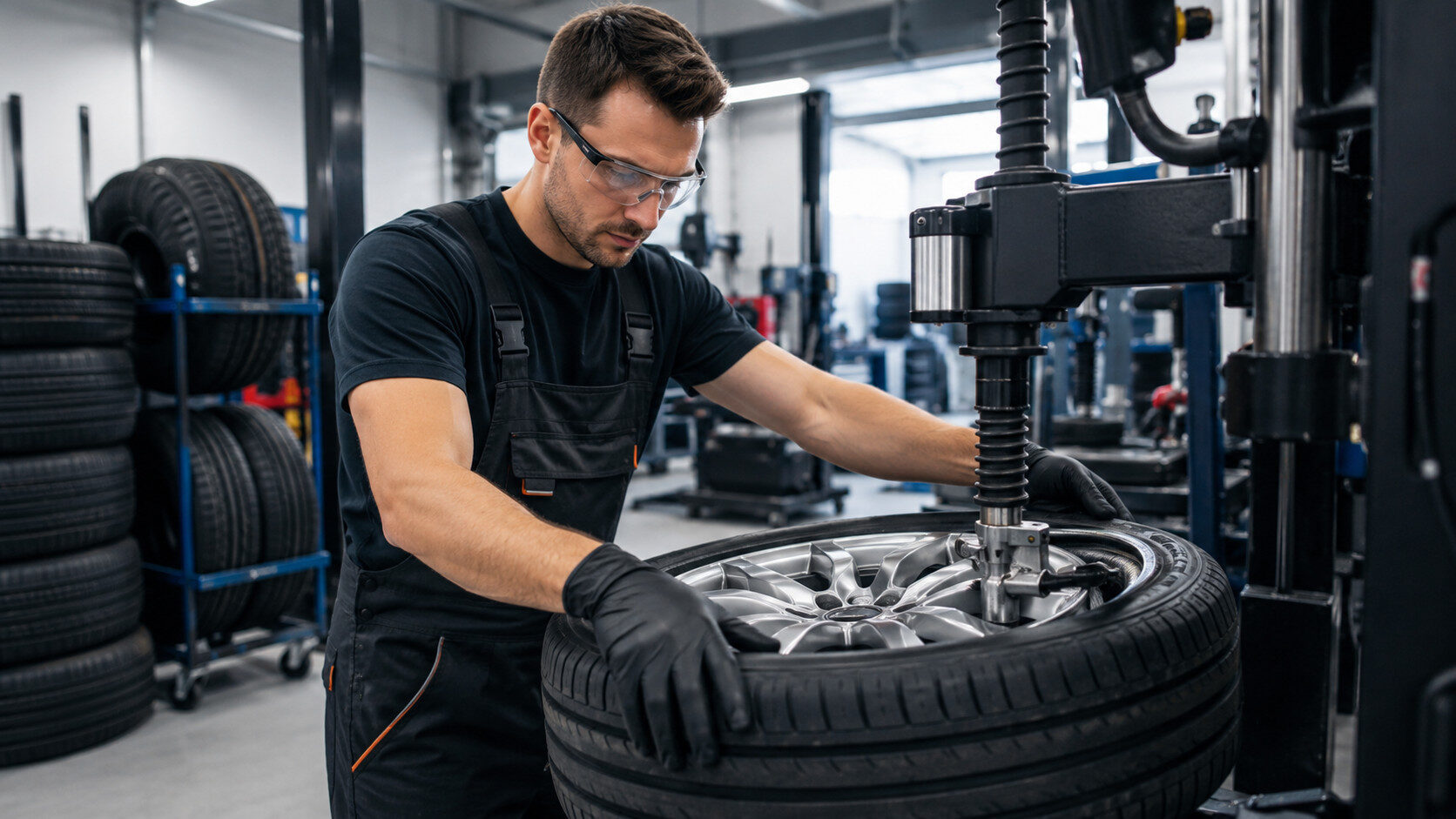
Plug, patch, or plug-patch
A plug alone, pushed in from outside, seals the hole but does not seal the inner liner or let anyone inspect the inside of the tire. A patch alone seals the liner but does not fill the injury channel. The repair the industry treats as proper is the combination: the tire comes off, the inside is inspected, the injury is filled, and a patch seals the liner over it, after which the tire is remounted and balanced.
That sequence is exactly why a flat repair is shop work even when the puncture looks tiny. The dangerous damage, liner scuffing from being run low, moisture worked into the belts, a second nail two inches away, is only visible from inside. The outside-in plug has a real use as an emergency get-home measure. It is not the repair you drive on for the next year.
After the repair
A repaired tire that met the rules goes back into normal service and normal rotation. Check its pressure a few days after the repair and again at your monthly check; a slow loss after a repair means something was missed and deserves a second look. Keep the receipt with the mileage noted, since it tells the next technician where the repair sits when the tire comes off again.
If the verdict was replacement instead, ask about matching. A new tire beside a worn one on the same axle handles unevenly, and all-wheel-drive vehicles are sensitive to diameter differences across the set. Sometimes the honest answer is one tire, sometimes a pair. The shoulder rule decided the first question; tread depth decides the second.
Common questions
Is a plug from a gas station kit a real repair?
It is an emergency measure. Without removing the tire and inspecting the inside, nobody can confirm the injury is repairable or seal the liner properly.
My puncture is right at the edge of the tread. Can it be fixed?
That is shoulder territory, and industry guidelines say no. The flex in that area makes a lasting repair unreliable, so replacement is the standard answer.
Can a run-flat tire be repaired after I drove on it flat?
Often not. Driving on a deflated tire can damage the inner liner and structure in ways that rule out repair, which is why the inside inspection decides it.
Photos in this guide are representative stock images.
← All guides from M & R Retreading & Oil Co← Back to M & R Retreading & Oil Co